Why install conservation practices or best management practices (BMPs)?
Address problem areas: Conservation practices target and rectify specific issues within the agricultural fields, enhancing overall field health.
Tailor to your farm goals: Find the right practice that aligns with your unique farm management objectives for optimal results.
Boost soil health: Enhance soil vitality and promote greater water infiltration.
Improve drainage: Implement practices that optimize drainage, reduce soil and nutrient loss, and lead to better field productivity.
What are the benefits to water quality?
Reduce soil erosion: By stabilizing concentrated flow paths and actively eroding areas, runoff of sediment and nutrients is minimized, leading to cleaner water resources.
Mitigate downstream erosion: By enhancing water infiltration and capturing runoff upstream, downstream velocities are reduced, which decreases bank erosion.
Enhance water and stream habitat: Treating surface runoff upstream improves both water quality and the health of in-stream habitats, fostering a more resilient aquatic ecosystem.
What types of conservation practices can be installed?
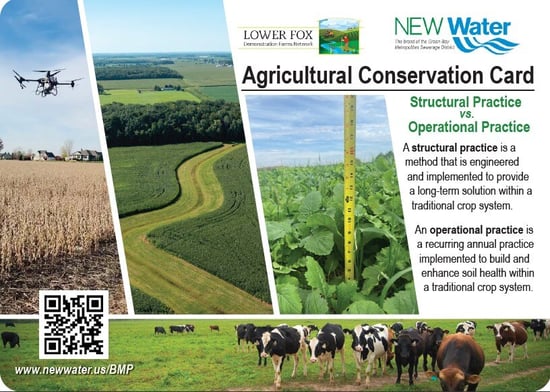
Structural Practice vs. Operational Practice
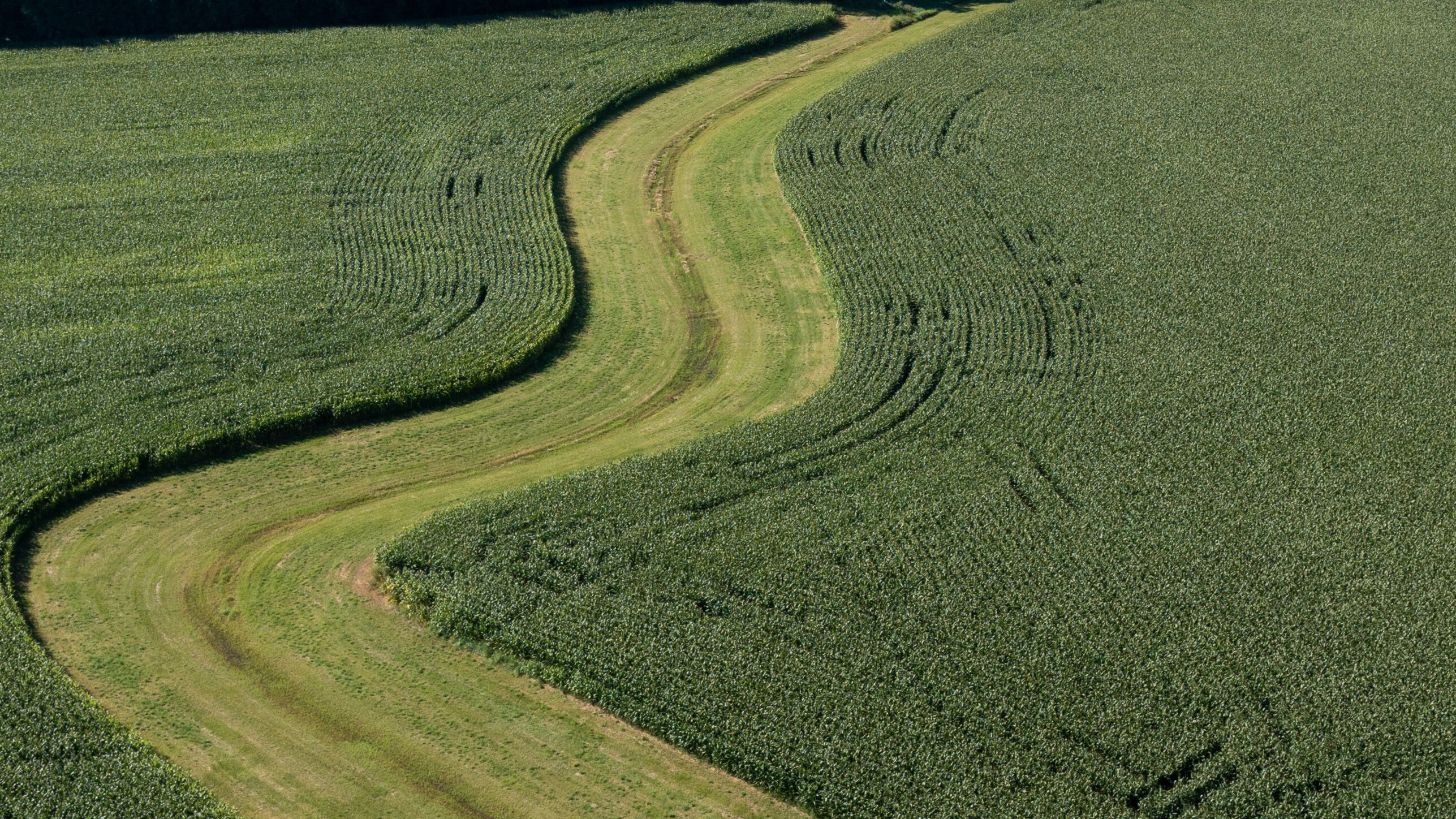
A structural practice is a method that is engineered and implemented to provide a long-term solution within a traditional crop system.
An operational practice is a recurring annual practice implemented to build and enhance soil health within a traditional crop system.
Structural Practices
Two-Stage Ditches
Two-Stage Ditches
Two-stage ditches are an advanced conservation practice designed to enhance water management while providing multiple benefits.
Learn more
Operational Practice
Drone Seeding
Drone Seeding
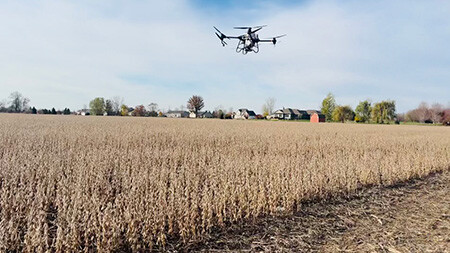
Drone seeding is an innovative agricultural technique that employs drones to distribute seeds, like cover crops, over fields.


 Download the Agricultural Conservation Card >>